-
Shift from IPv4 to IPv6
almost 10 years ago
Complete shift from IPv4 to IPv6 might not be possible because IPv6 is not backward compatible. This results in a situation where either a site is on IPv6 or it is not .
The techniques that we use to provide this shift are
Dual Stack Routers
A router needs to be installed on the both versions IPV4 and IPV6 and the configuration is being made which points to the network of IP scheme.
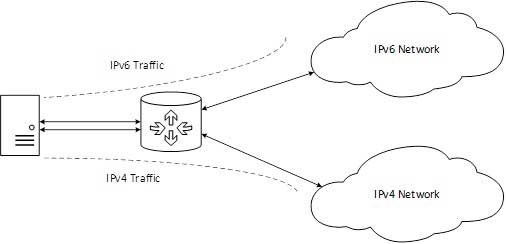
In this diagram , we can see that both versions IPV4 and IPV6 are configured in the dual mode and they will listen request from IPV4 and IPV6 and will respond to it accordingly.
Tunneling
In this scenario, the difference of the IP version will exist in the intermediary path on the network, so for this what we do is we place the configurability in between to support previous version and the new versions.

The above diagram depicts how two remote IPv4 networks can communicate via a Tunnel, where the transit network was on IPv6.
NAT Protocol Translation
This is the method of transition from the Network end . This is nothing but a device that will help the IPV4 and IPV6 packets to understand and store data.
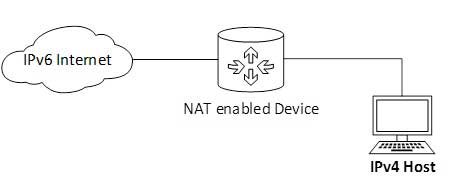
A host with IPv4 address sends a request to an IPv6 enabled server on Internet that does not understand IPv4 address. In this scenario, the NAT-PT device can help them communicate.


0 Comment(s)