Node is saved as draft in My Content >> Draft
-
Function in C++
about 10 years ago
For declaring and defining functions in C++ we have the syntax and we have to follow it.
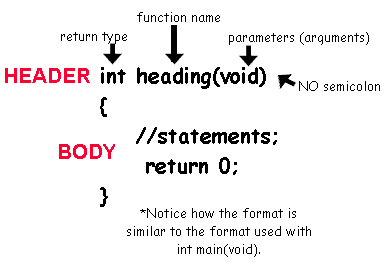
The general form for declaring a function in C++ is:
/* Signature of function */ return_type function_name( parameter list ) { body of the function }-
Return Type: The return type specifies what a function should return.
-
Function Name: This is the name by which we call and access it.
-
Parameters: Parameters are used to find values and results at runtime.
-
Function Body: It is the collection of the logic that the function performs.
// function returning the max between two numbers

int max(int num1, int num2)
{
   // local variable declaration
   int result;

   if (num1 > num2)
      result = num1;
   else
      result = num2;

   return result;
}
Types of arguments passed into the function:
Call Type Description Call by Value
The actual value of the called argument is passed to the calling function Call By Pointer
The address value of the called argument is passed to the calling function Call By Reference
The reference of the called argument is passed to the calling function #include <iostream> using namespace std; int sum(int a, int b=20) { int result; result = a + b; return (result); } int main () { // local variable declaration: int a = 100; int b = 200; int result; // calling a function to add the values. result = sum(a, b); cout << "Total value is :" << result << endl; // calling a function again as follows. result = sum(a); cout << "Total value is :" << result << endl; return 0; } -


0 Comment(s)